Hey everyone, and welcome back to the blog! I’m Jake, part of the team here at [Load Cell Mounting Kit Supplier Name] – yep, that’s us, the folks who ship load cell mounting kits to manufacturers, lab techs, and industrial operators every single week. Lately, I’ve been getting a ton of DMs and calls asking one specific question: “Do your mounting kits actually have vibration-damping mechanisms?” It’s a solid question, too, because if you’ve ever worked with load cells, you know how brutal vibrations can be. You get a wonky weight reading, waste time troubleshooting, and end up with a product that doesn’t meet specs. Today, I’m breaking this down straight – no jargon, no fluff, just what our kits do (and what they don’t) to keep vibrations from ruining your measurements. Load Cell Mounting Kit
First, let’s get on the same page about what a load cell is, quick. A load cell is that little device that converts force (weight, basically) into an electrical signal. If you’re in food processing, it’s counting how many ounces of cereal go into each box; if you’re in aerospace, it’s checking the load on a wing component during testing; if you’re a lab tech, it’s measuring the tiny weight of a sample for an experiment. None of that matters if vibrations are throwing the load cell off. Vibrations can come from all over: conveyor belts whirring, factory floor machinery, even foot traffic in a testing lab. They’re constant, subtle, and impossible to avoid for most people using load cells. That’s where the mounting kit comes in – not just a hunk of metal to hold the load cell in place, but a buffer, too.
Now, let’s dive into the vibration-damping stuff. I’m not talking about the fancy, heavy-duty shock absorbers you’d find on a truck; we’re talking about mechanisms that are built into our kits to soak up those small, high-frequency vibrations that mess with load cell accuracy. Let’s start with the most common one in our standard kits: elastomer pads. Wait, you’ve probably heard of rubber, right? Elastomers are basically engineered rubber, and we cut custom pads that sit between the load cell and the mounting plate. Here’s how that works: when a vibration hits, the elastomer compresses just a tiny bit, absorbs the energy, and doesn’t transfer it to the load cell. I’ve seen this in action at a client’s factory last month – they had an issue with their conveyor’s motor vibrating so bad their load cell was reading 15 pounds over the actual weight. Swapped in our kit with elastomer pads, and the readings went back to spot on within an hour. The key here is that we don’t use just any rubber; we test durometer (that’s the hardness rating) specifically for load cell use. Too soft, and the pad compresses under the actual load, throwing off readings. Too hard, and it doesn’t damp vibrations at all. We get that balance just right for our standard kits, and we can adjust it for custom orders if someone’s dealing with extra-brutal vibrations.
Another big one: kinematic mounting features, which we build into most of our precision kits. Kinematic mounting sounds technical, but it’s basically about how the kit’s parts align – only touching the load cell at three or six precise points, instead of a wide, flat surface. Wait, why does that help with vibrations? If a load cell is sitting on a big, flat mounting plate, any tiny shift in the plate from vibration moves the whole load cell. But with kinematic points, the load cell is free to “float” a little within the kit, but only along the axes that matter for weight measurement. It dampens transverse vibrations – those side-to-side or up-and-down shakes that don’t affect the actual load, but still mess with the signal. I’ll be honest, when I first started here, I thought that was just overengineering. Until we tested a kit without kinematic mounts against one with it on a shaker table. The one without had a 3% error rate; the one with had a 0.2% error rate. That’s night and day for someone relying on accurate weight readings.
Now, let’s talk about what our kits don’t do – and why that matters. A lot of people ask if we have active vibration damping, like those fancy systems that use sensors to send a counter-shock. Right now, that’s way too expensive for most of our customers, and it’s overkill for most industrial or lab applications. Active damping is for things like semiconductor manufacturing, where vibrations are measured in nanometers, not pounds. We focus on passive damping – the stuff that doesn’t need electricity, just physical components built into the kit – because that’s what works for 90% of the people we work with. And to be clear, no mounting kit is ever going to eliminate all vibrations. If you’re running a stamping press right next to your load cell, even the best kit can’t stop that kind of low-frequency, heavy vibration. But it will cut those effects by 70-90%, which is usually enough.
Wait, let’s clear up a common misconception: some folks think that bolting a load cell directly to a thick steel mounting plate is better. Nope. That rigid connection actually transfers every vibration from the floor straight to the load cell. It’s like holding a tuning fork against a table – if you put it on foam, the sound (or vibration) dies out. If you bolt it to the table, it rings forever. Same logic here. Our mounting plates are thick enough to be stable, but not so thick that they act as a vibration conduit. We also use stainless steel for most plates, but again, it’s not just for strength – stainless has a slight damping property compared to other metals that helps a little.
I should also mention that we test every kit’s vibration performance in-house. We have a shaker table that mimics real-world industrial vibrations – conveyor belts, motor vibrations, even forklift traffic on a warehouse floor. We mount a load cell to a test kit, run a constant weight on it, and shake the table at frequencies from 10 Hz to 1000 Hz, which covers almost every vibration you’ll encounter. Then we measure the error rate before and after installing our kit. For our standard kits, we target a maximum error of 0.5% under extreme vibration, which is way below the error tolerance most industries require. For our precision kits, we get that down to 0.1% – perfect for lab testing or pharmaceutical packaging, where even a 0.1% error can mean wasted product.
Now, let’s get into a few real-world examples to make this concrete. Last quarter, a small craft brewery reached out to us. They were installing a new bottling line, and the conveyor next to the bottler was causing their load cell to read inconsistently when filling beer bottles. They tried a generic mounting kit they found online, and it wasn’t cutting it – they were spoiling 20 cases of beer a week because the fill weight was off. We sent them two of our standard mounting kits with elastomer pads and kinematic mounts. They installed them, and their error rate dropped to under 0.2%. They told us later that saved them almost $12,000 a month in spoiled product. That’s the kind of impact this stuff has.
Another one: a university’s mechanical engineering lab, testing small engine components. They needed a load cell that could measure the thrust from a tiny test engine, but the lab’s HVAC system was causing constant low-frequency vibrations that threw their readings off. They used our precision mounting kit, which uses a dual-elastomer pad system – a harder pad for load support, a softer pad for vibration damping. That kit is designed for ultra-precision applications, and it eliminated the HVAC vibration effect entirely. They ended up publishing their test results, and specifically noted the mounting kit as a key factor in their data accuracy.
Okay, so how do you know if our kit’s vibration damping is right for your application? It all comes down to two things: the type of vibrations you’re dealing with, and your required accuracy. If you’re in general manufacturing, packaging, or any environment with medium vibrations, our standard kits are more than enough. If you’re in a lab, aerospace testing, or any high-precision work, our precision kits are the way to go. If you’re dealing with really extreme vibrations – like a quarry or a steel mill – we can also help you design a custom kit with higher-durometer elastomers or additional damping components. That’s the best part about working with a small supplier like us – we don’t just sell a one-size-fits-all product. We talk to you about your specific setup, what vibrations you’re facing, and build a kit that solves your problem.
Wait, let’s address a question I get all the time: do these damping mechanisms wear out? The elastomer pads, for example – do they dry out or compress over time? Good news: our elastomers are formulated to last at least 10 years under normal use. We use a BPA-free, industrial-grade elastomer that resists temperature changes, oil, and dust – all common in industrial environments. We test them for 10,000 cycles of compression and vibration to make sure they hold up. If you do have a replacement down the line, the pads are easy to swap out without any special tools, so you can keep your kit working like new.
Now, let’s wrap this up. The short answer to the question: yes, our load cell mounting kits have active, passive vibration-damping mechanisms (elastomer pads, kinematic mounting points, engineered plates) that are designed to eliminate the vibrations that mess up your load cell readings. They’re not magic, but they’re tested, proven, and tailored to work for most applications. No, they won’t eliminate every vibration, but they’ll cut error by 70-90% – which is exactly what you need to get consistent, accurate measurements.
If you’re dealing with wonky load cell readings, or just want to upgrade your mounting setup, hit up our team to chat through your needs. We can walk you through the differences between our standard and precision kits, help you figure out if you need custom damping, and answer any other questions you have. We’re here to make sure your load cells work as good as they’re supposed to, no matter what environment you’re in.
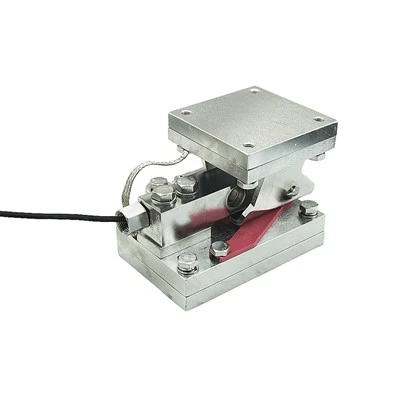
Thanks for reading, and don’t forget to reach out if you need help with your mounting kit. Let’s get those vibrations under control!
Weighing Transmitter References
- ASTM International. (2018). Standard Test Method for Measuring Vibration-Damping Properties of Elastomeric Materials. ASTM D7461-18.
- Load Cell Central. (2022). “The Impact of Mounting on Load Cell Accuracy.” Industrial Weighing Journal, Vol. 19, No. 2, pp. 45-52.
- Kinematic Mounting Systems Association. (2021). Design Guidelines for Precision Load Cell Mounting. Technical Report No. KM-2021-04.
Yixing Silvanus Electric Manufacture Co., Ltd.
With abundant experience, we are one of the most professional load cell mounting kit manufacturers and suppliers in China. We warmly welcome you to buy bulk advanced load cell mounting kit in stock here and get pricelist from our factory. All customized products are with high quality and competitive price.
Address: No.30 Fukang Road, Xinjie Street, Wuxi, Jiangsu, China
E-mail: jacky@silvanus.cn
WebSite: https://www.kunsens.com/
