Hey everyone, it’s Jamie from your go-to voltage stabilizer supplier – yeah, the one who’s spent way too many hours troubleshooting power issues for warehouses, clinics, and small manufacturing shops across the country. Lately, I’ve been getting nonstop DMs: “My stabilizer’s acting up when it’s over 90°F,” “Should I even run my unit in a 100°F garage?” Let’s cut the fluff – high temps and voltage stabilizers don’t mix well if you skip the small, easy precautions. And since I’m the one who sells these things, trust me when I say I’ve seen every mistake under the sun. Voltage Stabilizer

First, let’s keep this real. When the mercury climbs, your stabilizer isn’t just “a box that fixes voltage” – it’s a hunk of metal, circuits, and cooling parts that work way harder when it’s sweltering. Last summer, a regular customer who runs a small food processing line had three stabilizers crap out mid-production because he stuck them in a unventilated closet by his industrial ovens. He lost $12k in spoiled product, and it was all avoidable. So let’s break down the non-negotiable precautions, no jargon, just stuff you can act on today.
First up: placement is not an afterthought, especially in heat. I can’t tell you how many people tuck their stabilizers into corners, under shelves, or against exterior walls that get direct sun all day. Here’s the thing – all stabilizers have internal fans, right? Those fans need to pull cool air from one side and push hot air out the other. If you block the intake vent (usually on the bottom or back) or the exhaust vent (top or side), that hot air gets trapped inside, and the unit overheats faster than a phone left in a car.
Rule #1 for high temp environments: Keep at least 12 inches of clear space around every vent. No stacking boxes on top, no leaning it against a brick wall, no sticking it under a workbench. I know space is tight – we all do – but a 2-foot extra spot for the stabilizer could save you a replacement down the line. Also, skip the sun. If your unit has to go outside, even a covered patio, put it under an awning or in a shaded spot. Direct sunlight raises the external temp by 10-15°F, which is like making your stabilizer work in an 85°F day instead of 70°F. I remember a customer who mounted his stabilizer on a south-facing garage wall – after two months, the internal temp gauge was hitting 120°F just from sun exposure. Total no-go.
Next, don’t overload it. This is the big one that even some seasoned electricians mess up. Let’s say your stabilizer is rated for 10kVA – that means it can safely handle 10,000 volt-amps of power. In cool weather, you might push it to 9kVA and it’s fine, but in 95°F heat? That extra 1kVA is like asking a marathon runner to sprint in triple-digit temps. Your stabilizer’s cooling system can’t keep up with both the extra load and the higher ambient heat, so internal components (transformers, capacitors, fans) wear out way faster.
How do you check the load? Most modern stabilizers have a digital display that shows current draw – just subtract that from the unit’s max rating to see your headroom. If you’re consistently running over 80% of the max capacity in high temps, it’s time to either upgrade to a higher kVA unit or unplug non-essential devices. Last year, a client with a small print shop was running three printers, a heat press, and a computer on a 15kVA stabilizer – they were pulling 14kVA in summer. We swapped them for a 20kVA unit, and their overheat error codes vanished within a week. Simple as that. Pro tip: If you’re not sure what your total load is, send me your equipment list – no pressure, just happy to help.
Then, maintenance isn’t just for winter. A lot of people clean their stabilizers once a year, if that, but when it’s hot, dust and debris turn into a problem fast. Dust clogs the intake vents, so the fan can’t pull enough cool air. I once opened up a stabilizer for a customer and found a inch of lint and spider webs covering the internal fan blades – that unit was running at 100% capacity but barely moving air, so it overheated every afternoon at 3pm.
So what’s the routine? Every month during high temp season (that’s basically May to September for most of us), do a quick visual check: Wipe the outside vents with a dry cloth to remove dust, and if you can access the internal fan (most consumer units have a removable side panel), gently brush off any lint with a soft paintbrush. Skip the vacuum – static from vacuums can damage circuit boards. Also, check the fan itself. If it’s making weird grinding noises, or you notice it’s not spinning as fast as it should, replace it. A $20 fan is way cheaper than a $500 stabilizer repair.
Wait, what about temperature sensors? Some newer stabilizers have built-in thermal shutoffs – they’ll turn themselves off if internal temp gets too high, to prevent permanent damage. But here’s the catch: If your shutoff is tripping more than once a week, that’s a sign something’s wrong. It could be a clogged vent, overloading, or even a faulty sensor. Don’t just reset it and move on – figure out why it’s overheating. I had a customer who ignored his tripping shutoffs for three weeks, and his stabilizer’s transformer burned out. He ended up paying for a emergency replacement, which cost way more than if he’d fixed the vent problem first.
Another thing: Avoid daisy-chaining devices. I see this all the time – people plug a surge protector into their stabilizer, then plug their AC, fridge, and TV into the surge protector. That’s not how it works. The stabilizer is designed to handle your total load directly, and adding extra cords or adapters creates extra heat. Also, in high temps, your AC is probably pulling a huge amount of power, so if you’re running other big devices off the same circuit, that’s double the load on your stabilizer.
Last summer, I did a site visit for a apartment complex where 10 units had failed stabilizers. Turns out, the maintenance guy had plugged each stabilizer into a power strip, and all the strips were stacked in a utility closet with no ventilation. The heat from all the strips plus the stabilizers was cranking the internal temp up to 130°F. We repositioned each stabilizer to have clear vents, and removed the power strips – not a single failure after that. Easy fix, right?
Now, let’s talk about extreme temps – like if you’re in a area that hits 105°F or more. Your standard stabilizer is rated for a certain ambient temp, usually around 104°F, give or take. If you’re regularly above that, you need a unit rated for higher temps. I have a line of high-temperature stabilizers that are built with thicker insulation, larger fans, and thermal-resistant capacitors, so they can handle up to 122°F ambient temp. A lot of people try to run their regular units in 110°F heat and wonder why they die – it’s not the unit’s fault, it’s using the wrong tool for the job. I always tell customers: If your daily high temp is over 100°F, spring for the temp-rated unit. It might cost a little more upfront, but it’ll last twice as long.
Wait, what about backup generators? A lot of people pair stabilizers with generators during outages. But here’s a heads up: Generators also put out extra heat, so if your generator is right next to your stabilizer, that’s adding more ambient heat to your unit. Keep at least 3 feet of space between the two, and if possible, run the generator slightly away from your stabilizer’s intake vent. Also, make sure your stabilizer is compatible with generator output – some older stabilizers can’t handle the variable voltage from generators, which makes them work harder in heat. If you have a generator, let me know, and I’ll help you pick a stabilizer that plays nice with it.
I know this sounds like a lot, but it’s all small steps. Let’s recap the big ones so you don’t have to scroll back: 1) Give your stabilizer 12 inches of clear space around vents, away from sun and heat sources. 2) Don’t overload it – stay under 80% of max kVA in high temps. 3) Clean vents and fans every month during hot season. 4) Don’t ignore tripping thermal shutoffs. 5) Avoid power strips and daisy-chaining. 6) Use a temp-rated unit if you’re consistently over 100°F.
I get it, no one wants to deal with their power equipment breaking in the middle of a heat wave. That’s why I’m here – I’ve been in this game for 8 years, I’ve fixed way more stabilizers than I’ve sold, and I know exactly what goes wrong when people skip these precautions.
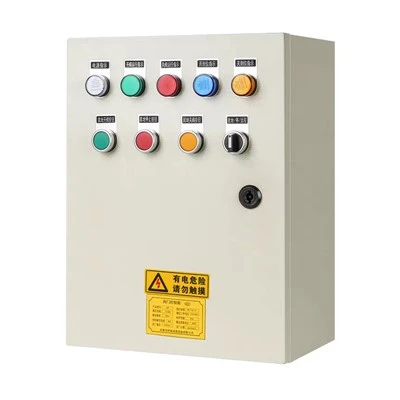
If you’re noticing your stabilizer overheating, or you’re not sure what size unit you need for your space, hit me up. I can walk you through checking your load, recommending the right placement, or even sending a technician to take a look, no strings attached. Don’t wait until your unit dies – a quick check now can save you a ton of money and hassle later.
Voltage Stabilizer References:
- Industrial Voltage Stabilizer Operating and Maintenance Guidelines. National Electrical Manufacturers Association, 2022.
- Effects of Ambient Temperature on Power Electronic Equipment Reliability. IEEE Transactions on Power Electronics, Vol. 37, No. 4, 2021.
- High-Temperature Power Equipment Best Practices. Occupational Safety and Health Administration (OSHA) Technical Report, 2023.
Wenzhou Mingyue Electric Co., Ltd.
As one of the most professional voltage stabilizer manufacturers and suppliers in China, we have world-leading production equipment and strong manufacturing capabilities. Please feel free to wholesale durable voltage stabilizer in stock here and get quotation from our factory. We also accept customized orders.
Address: No. 16, Zhongsan East Road, Donghuangyu Village, Liushi Town, Yueqing City, Wenzhou City, Zhejiang Province
E-mail: Hu17687922780@outlook.com
WebSite: https://www.cn-mingyue.com/
