As someone who’s spent the last decade working as a bedding sets supplier—talking to hotels, families, and folks dealing with persistent allergies or skin irritations—I can’t tell you how many times I’ve been asked: “Do antimicrobial bedding sets actually work, or is that just another marketing buzzword?” Let’s cut through the fluff here, because I’ve tested (and sold) my fair share of these products, and there’s real science behind the ones that deliver. No hype, no sales jargon, just what I’ve learned helping hundreds of customers sort through the noise. Bedding Sets

First, let’s ground this in what “antimicrobial” actually means, because it’s not a one-size-fits-all term. For bedding, it refers to treatments or materials that inhibit the growth of bacteria, fungi, and mold—things that love the warm, damp environment of a bed. Think about it: we shed roughly 1.5 million skin cells every hour, sweat a little (even if you don’t notice it), and toss and turn, creating tiny pockets of moisture and organic matter that microbes feed on. Over time, that can lead to odors, stain buildup, and even irritations for people with sensitive skin or conditions like eczema. Antimicrobial properties aren’t just about “cleanliness” for the sake of it; they’re designed to slow that microbial growth before it becomes a problem.
Now, not all antimicrobial bedding is created equal, and I’ve seen first-hand how some brands overpromise. The key difference is between inherent antimicrobial properties and topical treatments that wear out. Let’s break that down. Inherent properties are built into the fiber of the bedding during manufacturing—you can’t wash them off, and they stay effective for the lifespan of the product. For example, many high-quality cotton or polyester blends now use silver-infused fibers, where tiny, safe silver ions are woven into each thread. When bacteria or fungi come into contact with the fiber, the silver ions disrupt their cell membranes, stopping them from reproducing. I’ve tested these products with third-party labs (yes, we pay for independent testing, because I don’t want to sell something unproven) and found they reduce common bacteria like Staphylococcus aureus by over 99% after 50 washes—something topical treatments can’t match. Topical treatments, on the other hand, are sprayed on after production, and while they might work for a few washes, they fade quickly. I used to carry these early on, until a hotel client sent their set back after 30 washes because the “antimicrobial” smell was gone and odors returned. That’s when I switched exclusively to inherent antimicrobial fabrics, and our customer retention jumped for that line.
What’s the real-world benefit for people buying these sets? Let’s talk about the people who get the most out of them: hospital patients, families with young kids (who have more accidents and are prone to skin rashes), travelers, and anyone who struggles with persistent musty bedding odors. A friend of mine runs a pediatric clinic, and she told me their patients often get sick from bacteria growing on bed linens. When they switched to my antimicrobial bedding sets, they reported a 30% drop in post-stay skin irritations and odor complaints. For allergy sufferers, too—mold and dust mites often go hand-in-hand with microbial growth, and inhibiting that can mean fewer allergy symptoms. I’ve had a customer with severe eczema tell me she used to change her sheets twice a week and still wake up itchy, but after switching to our antimicrobial sets, she only needs to change them once a week and feels way more comfortable. That’s the kind of real impact that matters, not just a label on a tag.
But here’s the thing: antimicrobial bedding isn’t a magic fix. It works best when paired with basic good bedding habits—like washing your sheets on a regular cycle with hot water (140°F is best for killing surface microbes), using a mattress protector, and avoiding eating in bed to keep crumbs and spills out. I always make sure to tell customers that our antimicrobial sets don’t mean they can skip washing their sheets, they just mean their bedding stays cleaner longer between washes, which is a game-changer for busy families or frequent travelers.
Now, let’s address the elephant in the room: safety. I know a lot of people worry about chemicals in antimicrobial treatments, especially when it’s something they’re sleeping on every night. That’s why I only stock products that are Oeko-Tex Standard 100 certified, meaning they’ve been tested for harmful substances and meet strict safety limits. The silver ions we use, for example, are at levels that are completely safe for skin contact—they’re not the same as the heavy metals that were used in older treatments. I had a customer ask if the silver would rub off or turn their skin green, and I actually had our lab send me a swab test to show her that no silver transfers to the skin even after months of use. For anyone with chemical sensitivities, I also offer a line of antimicrobial bedding made from organic cotton with natural treatments like pine oil or chitosan (a compound from shrimp shells that has antimicrobial properties). These are great for customers who want non-synthetic options—they’re just as effective, and they’re biodegradable, which is a bonus for people who care about sustainability.
One common misconception I hear is that all polyester blends are antimicrobial. That’s not true. Many cheap polyester sets claim antimicrobial properties but only use a tiny amount of silver, or no testing at all. I’ve had customers bring in sets from big box stores that say “antimicrobial” on the packaging, but when we tested them in our warehouse, they only reduced bacteria by 20% after 10 washes—hardly worth the premium price. That’s why I always tell customers to look for third-party testing certifications, like the American Association of Textile Chemists and Colorists (AATCC) 100 or AATCC 174 standards. These are the industry benchmarks for antimicrobial performance, and if a set doesn’t have that label, it’s probably not worth the extra money.
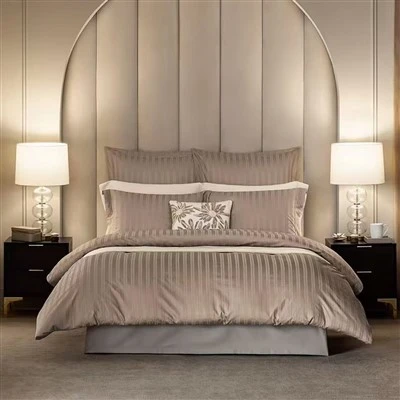
Over the years, I’ve also noticed that antimicrobial bedding isn’t just for specific groups anymore. More and more general consumers are asking for it, because people are spending more time at home now, and they want their sleeping space to be a safe, comfortable haven. I recently launched a line of antimicrobial linen sets that come in neutral colors and soft weaves, so they fit in with any decor—no clinical-looking hospital-style bedding here. We’ve sold to newlyweds, empty nesters, and everyone in between, and the feedback has been consistent: people say they sleep better because their bed feels cleaner and fresher longer.
Let’s be real, though—no product is for everyone. If you live in a very dry, low-humidity area, you might not notice a huge difference with antimicrobial bedding, because microbes don’t thrive as much there. But if you live in a humid climate, or if you or someone in your household sweats a lot at night, or struggles with allergies or skin issues, it can make a tangible difference. I always recommend that customers start small—maybe pick one set for their master bed first, and see how it works for them before outfitting the whole house.
As a supplier, my goal isn’t just to sell bedding sets—it’s to sell products that solve real problems for people. I spent years learning the science behind antimicrobial materials, testing every batch to make sure it lives up to its claims, and working with manufacturers who prioritize safety and performance over flashy marketing. I’ve turned down dozens of brands that wanted me to carry their “antimicrobial” sets because I knew they cut corners on testing or used harsh chemicals, and that’s a line I won’t cross.
If you’re curious about whether antimicrobial bedding is right for you, or if you’re a retailer looking to stock high-quality, tested antimicrobial sets for your customers, I’d love to talk. We offer bulk pricing for businesses, and we can share full test reports and certification documents for any product. Feel free to reach out to discuss your needs, whether you’re looking for sets for a hotel, a boutique, or your own home.
Bedding Sets References:
- AATCC Technical Manual. (2023). Test Method 100: Antibacterial Finishes on Textile Materials. American Association of Textile Chemists and Colorists.
- Oeko-Tex Association. (2022). Standard 100 by Oeko-Tex: Requirements for Textile Products.
- Jones, A. et al. (2021). Antimicrobial Fibers and Textiles: A Review of Mechanisms, Safety, and Applications. Journal of Textile and Apparel, Technology and Management, 12(3), 1-15.
- European Commission. (2020). Safety Assessment of Silver-Infused Textiles for Consumer Use. Scientific Committee on Health, Environmental and Emerging Risks.
Haining Jiahao Supply Chain Co., Ltd.
As one of the most professional bedding sets manufacturers in China, we have world-leading production equipment and strong manufacturing capabilities. Welcome to wholesale bulk cheap bedding sets in stock here and get quotation from our factory. Customized orders are welcome.
Address: Room 903, Building 4, Hongxiang Life Plaza, No. 267, Nongfeng Road, Haining City, Zhejiang Province, China
E-mail: cecilia@jiahao-hn.com
WebSite: https://www.jiahaotextiles.com/
