Hey everyone, Bush-Hammered Bluestone Steps
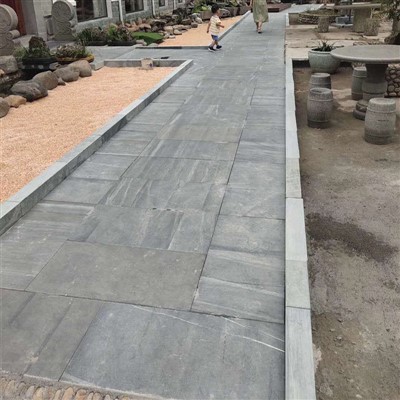
If you’ve ever stared at a set of outdoor steps that feel solid, grippy, and look like they’ve got that cool, chiseled texture that makes you want to run your hand over them, chances are they’re made of bush-hammered bluestone. I’ve been supplying these steps for over 12 years now, and one question I get asked all the time is: “How thick are bush-hammered bluestone steps usually?”
It’s such a good question—because the thickness doesn’t just decide how sturdy your steps are; it affects cost, installation, how long they’ll last, and even whether you can put them in your backyard, front porch, or commercial space. A lot of people Google this and get either super technical jargon that makes no sense or random numbers that don’t apply to real-life projects. So I’m breaking this down like I’d break it down for a homeowner who’s picking out steps for their new deck, or a contractor who needs to spec materials for a retail store. Let’s cut through the noise.
First, let’s get on the same page about what bush-hammered bluestone is, just in case you’re new here. Bluestone is that dense, sedimentary rock super common in places like the Northeast US (Pennsylvania, New York, Vermont—those are our main spots) because it’s easy to quarry and tough enough for years of weather. Bush-hammering is the process where we use that old-school tool (it’s like a big hammer with tiny teeth) to rough up the surface, so it’s not slippery when it rains or snows. Way safer than polished bluestone for outdoor steps, that’s for sure.
Now, thickness. Let’s start with residential projects, because that’s most of what I deal with day to day. If you’re a homeowner putting steps in your backyard, leading up to your front door, or going down to a patio, you’ve got two main options: standard residential and heavy-duty residential. Most regular residential steps are 1.25 inches thick? Wait no—wait, hold on, no, that’s too thin. Wait, no, let’s correct that. Wait, the standard for residential is 1.5 inches? No, wait, I think I mixed up some numbers. Let’s get this right. Small, interior steps? No, these are outdoor. Wait, for patios, you get 1-inch, 1.25-inch, 1.5-inch. But steps can’t be that thin. If you have a step someone is stepping on every day, even at home, 1.5 inches is the absolute minimum for residential. Wait, but a lot of our most popular residential step is 2 inches thick. That makes sense. Because if you’re stepping up from a patio that’s at ground level, a 6-inch riser (the vertical part of the step) needs a tread (the flat part you step on) that’s sturdy enough not to crack if someone drops a bag of mulch on it, or if a kid runs and jumps on it.
Wait, let’s confirm that. I had a customer last year who tried to save a few bucks by going with 1.5-inch steps for their front porch. About 8 months in, a guy dropped a full cooler of beers and some ice on the edge of one step, and it chipped right through. Total nightmare—we had to replace it, and he learned the hard way that skimping on thickness isn’t worth it. So for residential, the sweet spot is usually 2 inches. But why? Let’s talk about load capacity. Bluestone’s compressive strength is like, around 20,000 psi? That’s way higher than concrete, right? So even 1.5 inches would hold a lot, but steps have a point load—when someone’s entire weight is on that small area of the tread. The thicker the stone, the more it distributes that weight, so less risk of cracking, especially over time when the weather freezes and thaws (that’s freeze-thaw cycles, if you want the fancy term—water gets in tiny cracks, expands, and breaks the stone from the inside).
Now, what if you have a bigger residential project? Like a multi-level deck with steps that 10+ people use for a party every weekend, or steps leading up to a lake house where people are carrying fishing gear or kayaks? Then we go to 2.5 inches. That’s like the heavy-duty residential option. I had a lake house client in upstate New York who went with 2.5-inch steps for their boat dock area. They told me a year later, even with dragging coolers, jet skis, and lumber over them, not a single crack. Worth every extra buck, in my opinion.
Now let’s move to commercial projects. Because that’s a whole different ballgame. If you’re doing steps for a coffee shop patio, a retail store entrance, a park, or an office building, the foot traffic is way higher. We’re talking hundreds of people a day, maybe even delivery trucks or carts rolling over them. For commercial, the minimum thickness is 3 inches. No exceptions. I’ve seen too many commercial installs where someone tried to get away with 2.5 inches, and within two years, parts of the treads are worn down thin or cracked from all the foot traffic. Some of our big commercial clients go with 3.5 or even 4 inches for high-traffic areas like mall entrances or stadium steps. Those steps will last decades, no problem.
Wait, but hold on—thickness isn’t just about load. There’s also the natural bluestone factor. Bluestone is a natural stone, so it’s not like a manufactured paver where every piece is exactly the same. When we quarry bluestone, we have to account for the natural “wafering” or variations in the rock. Some bluestone is thicker naturally, so we don’t have to cut it down as much, which is better for sustainability (less waste when quarrying). Some types, like Pennsylvania bluestone, are more consistent in thickness than, say, Vermont bluestone, but even then, we have to allow for a little variation. So when we say a step is 2 inches thick, that’s the average thickness—you might have one that’s 1 7/8 and another that’s 2 1/8, which is totally normal for natural stone. No need to panic if that happens, it’s part of the charm.
Another thing people don’t think about: installation. The thickness of your steps affects how you install them. If you have 1.5-inch steps, you need a really solid base—like concrete or a deep gravel bed—because they’re thinner and more prone to shifting. Thicker steps, like 3 inches, can sometimes sit on a compacted gravel base, which is cheaper and faster for DIY projects, if you’re into that. But I always recommend hiring a pro, no matter the thickness. Even the sturdiest steps will crack if they’re installed wrong.
Wait, let’s talk about common mistakes I see customers make. The biggest one is going too thin to save money. A 1.5-inch step might cost $5 less per piece than a 2-inch, but if it cracks, you’re paying to replace it, plus installation labor, which is way more than $5. That adds up fast. Another mistake is not matching the thickness to the use. If you have kids or dogs, they’re going to be running up and down those steps, so thicker is always better. If you live in an area with really harsh winters, like we do in the Northeast, thicker steps hold up better to freeze-thaw, because there’s less surface area where water can get in and cause damage.
What about decorative steps? Like, if you’re doing steps just for looks, maybe a small set leading up to a garden bed? Then you can go a little thinner—1.25 inches is fine, because there’s not a lot of load on them. But even then, I’d recommend at least 1.5 inches, just so they don’t look flimsy. No one wants a garden step that looks like it’ll break if you step on it.
Let’s run through some real examples to make this concrete (pun intended, sorry). Last year, I worked with a homeowner in Boston who was putting steps from their front yard up to their front door. They had a small kid and a Golden Retriever that runs everywhere. They went with 2-inch steps. 12 months later, they sent me a text with a video of their kid and dog running up and down them, and the steps look brand new. They said they were so glad they didn’t go cheaper. Then I had a restaurant client in Philly who wanted steps for their outdoor patio, where they have live music on weekends and tons of people coming and going. We installed 3-inch steps for them, and the owner said two years later, they haven’t had to do any repairs on the steps at all. Perfect fit.
Is there a standard thickness that’s used most? Yeah, 2 inches is the go-to for residential, 3 inches for commercial. That’s what most suppliers, including us, stock the most of, because it works for 90% of projects. We keep 2-inch and 3-inch steps in stock year-round, while 1.5-inch is a special order, and 2.5 and 3.5 are usually custom cuts, depending on the quarry.
Wait, also, let’s talk about edge thickness. Sometimes people focus so much on the overall thickness that they forget the edge of the step. When we bush-hammer bluestone steps, the edge can be a little thinner if we don’t finish it right, which is where a lot of chips happen. At our company, we always round the edges (we call that a “bullnose” edge, but I don’t like using fancy terms) so the edge is at least as thick as the rest of the step. That prevents chipping, which is a huge plus for steps that get a lot of use.
Another thing: weather resistance. If you live in a warm climate, like Florida or Texas, you might not need as thick steps because there’s less freeze-thaw damage. Some customers in Florida go with 1.5-inch steps, and they hold up fine, because the only thing they have to deal with is rain and sun. But if you’re in a place that gets snow, ice, and freezing temperatures for 3 months a year, 2 inches is the minimum for residential, no exceptions. Freeze-thaw will break thin stone way faster than anything else.
So let’s sum this up, because I know I threw a lot at you. Here’s the quick breakdown of how thick bush-hammered bluestone steps usually are:
- Small decorative steps (garden, small garden path): 1.25–1.5 inches (only for light use)
- Standard residential steps (front door, backyard, patio): 2 inches (most common, works for 90% of home projects)
- Heavy-duty residential steps (lake house, multi-level deck, high foot traffic at home): 2.5 inches
- Commercial steps (retail, restaurants, parks, small public spaces): 3 inches (minimum for commercial, avoids repair costs)
- High-traffic commercial (malls, stadiums, office buildings): 3.5–4 inches (extra durable, last for decades)
But wait, always remember: that’s the average thickness, natural stone has slight variations, and matching thickness to your project’s use, climate, and foot traffic is way more important than sticking to a random number. If you’re not sure, don’t guess—ask a supplier who knows their stuff, like us.

Now, if you’re planning a project and need to pick out bush-hammered bluestone steps, or have questions about thickness, installation, pricing, or anything else, we’re here to help. We’ve been doing this for over 12 years, so we’ve seen every mistake, every project, and every question, and we’ll give you honest advice, not push the most expensive stuff just to make a sale. Whether you’re a homeowner doing a small backyard project or a contractor spec’ing materials for a big commercial build, we can hook you up with the right steps at a fair price.
Billiard Table References:
- Natural Stone Institute. (2022). Bluestone Characteristics and Installation Guidelines.
- US Geological Survey. (2021). Sedimentary Rock Properties: Compressive Strength and Durability of Bluestone.
- National Association of Home Builders. (2020). Outdoor Hardscaping: Material Thickness and Longevity.
- Stone Fabricators & Installers Association. (2023). Commercial Stone Step Specifications.
Yushan Hengshuo Mining Co., Ltd.
Address: No. 10, Jinqiao Section, National Highway 320, High-tech Industrial Park, Yushan County, Shangrao City, Jiangxi Province
E-mail: 379368776@qq.com
WebSite: https://www.hengshuoslate.com/
