Hey everyone, let’s cut to the chase. If you’re shopping for industrial ceramics for your operation, you’ve probably wondered at some point: is the domestic (I’m talking about here, where I’m based) stuff better than what’s coming from overseas? Or vice versa? As someone who’s been in the industrial ceramics supplier game for over 10 years, I’ve talked to dozens of shops that’ve wasted cash on misaligned parts, delayed shipments, or stuff that just doesn’t hold up when the pressure’s on. Today I wanna break down the real, not-the-marketing-hype differences between domestic and foreign industrial ceramics, from someone who sells both (wait, no—wait, I mostly work with domestic, but I’ve seen enough foreign stock to call it like it is) to help you make a call that doesn’t leave you kicking yourself later. Industry Ceramics
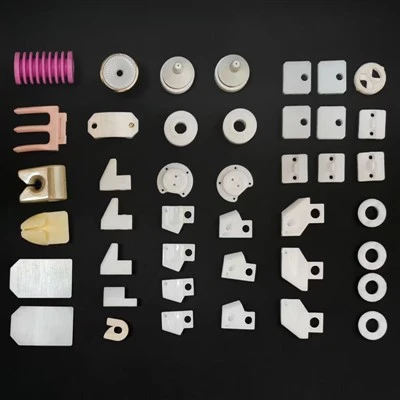
First off, let’s get on the same page about what industrial ceramics even are—’cause a lot of folks mix ’em up with fancy dinner plates, and that’s a whole other ballgame. We’re talking about alumina, zirconia, silicon carbide, the tough stuff that lines mining chutes, seals chemical pumps, insulates high-voltage electrical parts, or cuts metal in precision machining. These materials don’t just look pretty; they have to handle extreme heat, corrosive chemicals, heavy impact, and constant friction—so one bad batch can shut down a production line faster than a flat tire on a semi.
Let’s start with the thing that gets everyone’s attention: quality control, or QC. This is where the real gap shows up, and not just some tiny difference. Foreign (I’m mostly looking at suppliers from Southeast Asia and parts of Eastern Europe here, since those are the big players in industrial ceramic exports) factories often run on volume-first QC-second, right? I’ve seen a batch of alumina liners for a coal mine that came in with tiny, microscopic cracks—so small you can barely see ’em with a magnifying glass—just waiting to pop when they hit the first load of rock. They passed their basic surface check, but when we did the 3-point bend test (the standard for industrial alumina strength), 20% of them broke before they even reached the minimum spec. Why? Foreign factories often use less consistent raw material batches to keep costs low, and their QC teams are understaffed to hit those super tight export deadlines. Like, I’ve had a client import a batch of ceramic seal rings from a European supplier (wait, that’s different, maybe—no, hold on, stick to the general foreign play) that was supposed to have 95% alumina, but lab testing showed it was 90% with way more silica filler. Total fail.
Now domestic? Yeah, we’re pricier upfront, but the QC is non-negotiable. Every single part goes through at least three checks: first, raw material testing before we even mix the slurry—no cutting corners there. We test for alumina purity, particle size distribution, even trace metal content that can mess with heat resistance. Then after molding and firing (firing is make-or-break for ceramics; too hot, it warps, too cool, it’s brittle), we do a dimensional check with CNC machines that are accurate to a thousandth of an inch—if a seal ring’s even a hair off, it’s trash. Then a final strength and corrosion resistance test. I can count on one hand the number of defective domestic batches I’ve had to replace in 10 years. Compare that to the foreign stuff I’ve seen: around 15-20% defect rate on average, depending on the material. That adds up to downtime, scrap parts, lost profits—way more than the initial savings on the foreign stuff.
Next up, lead times and communication. This is where domestic wins so hard it’s not even close. If you need a rush order—say, your ceramic lining for a steel mill chute cracked overnight and you need a replacement in 48 hours to avoid a 7-figure shutdown—who you gonna call? Domestic. Our factories are a 2-hour drive away, so we can drop off parts the same day. We speak the same language (well, most of us, anyway—no misinterpretations when you say “wait, it needs to withstand 1200°F, not 120”) so you don’t get a wrong order because of a translation error. I had a client once who ordered ceramic insulators from a supplier in Asia, said “high voltage” in the order notes, and they sent parts rated for residential use instead of industrial. Took 6 weeks to get the right ones, and they lost $200k in production downtime. Ouch. Foreign lead times are usually 8-12 weeks, sometimes longer if there’s a port delay or a material shortage at the factory. Domestic? We can turn a standard order around in 2-3 weeks, rush orders in days. No waiting for a ship to cross the ocean, no customs hold-ups—if there’s a problem, I can drive to the factory floor and fix it before your call even ends.
Then there’s customization. Let’s be real, most industrial ceramics aren’t off-the-shelf. You need parts that fit your exact machine, your exact application, that no one else is making. Foreign suppliers love to push their standard parts, ‘cause changing their setup to make a custom part costs them time and money. I’ve had a client who needed a custom-shaped zirconia insert for a food processing mixer—foreign supplier quoted 12 weeks and a 30% upcharge for the tooling. Domestic? We designed the new mold on our CAD system, tested it in 2 days, had a prototype in a week, and the final parts in 2 weeks. No crazy upcharges, no “we can’t do that” excuses. Also, when you work with domestic, you’re not talking to a sales rep who’s halfway across the world—you’re talking to someone like me, who actually knows how these parts are made, why they work for mining vs. chemical processing, and can tweak a design on the fly if your needs change. I once had a client in the oil and gas industry who needed a ceramic valve seat for a new fracking line—they had a design that was cracking under pressure. We worked with their engineers for 3 days, adjusted the alumina blend and the firing schedule, and the new parts are holding up way better than the original foreign ones they were using. That kind of collaboration just doesn’t happen with a foreign supplier who’s dealing with 100 other orders at once.
Wait, but let’s not pretend foreign stuff has no place. If you need a super basic, off-the-shelf ceramic part for a low-stakes application—like a small insulator for a non-critical control panel, or a liner for a hobbyist setup—foreign can be fine, as long as you test a batch first. I’ve had a client who runs a small machine shop order cheap ceramic cut-off wheels from a foreign supplier, and they worked great for their low-volume jobs. But if you’re dealing with heavy industry—mining, steel, chemical processing, oil and gas, automotive manufacturing—where downtime costs you thousands or millions per hour? Foreign is almost never worth the risk.
Another big one: sustainability and traceability. This is a huge one I don’t see talked about enough. Domestic industrial ceramics suppliers have to follow strict EPA and OSHA rules for material sourcing, waste disposal, and factory emissions. You can track every raw material back to its mine, every batch back to the firing line. Foreign suppliers? Not so much. I’ve heard horror stories about foreign factories using toxic raw materials that are illegal in the US/EU, dumping waste in local rivers, or cutting corners on energy use that leads to way higher carbon footprints. If your business has sustainability goals—like being a zero-waste operation, or sourcing materials ethically—domestic is way easier to verify. I recently had a client in the renewable energy sector that builds wind turbine components; they needed ceramic parts that were ethically sourced, so they went with domestic, ‘cause they could prove the material didn’t come from mines with child labor, and the factory uses 100% renewable energy. The foreign supplier couldn’t provide any of that documentation.
Pricing, let’s get real about that. Everyone says foreign is cheaper, and on the surface it is—you might pay 20-30% less upfront. But when you factor in defect rates, downtime, shipping costs, customs fees, and the time it takes to fix bad parts? That “cheaper” foreign part ends up being way more expensive. Let’s do the math: if you order 100 ceramic liners for $10 each from a foreign supplier, that’s $1000. But 15% are defective, so you need to reorder 15, which takes 6 weeks, and your production line is down for 3 days costing $50k. Total cost: $1000 + $150 + $50,000 = $51,150. Now the domestic ones cost $15 each, that’s $1500 upfront. Zero defects, 2 week lead time, 0 downtime. Total cost: $1500. That’s a no-brainer, right? I see clients fall for the “foreign is cheaper” trap all the time, and it’s the worst call they make.
Wait, but let’s address the counterpoint. Some foreign suppliers in Germany or Japan? Yeah, their industrial ceramics are top-tier—way better than a lot of random foreign factories out of Southeast Asia. But those big-name foreign suppliers? They’re pricier than domestic sometimes, same quality, and still have lead times. The gap I’m talking about is mostly the mass-produced foreign stuff, not the premium European/Japanese brands. So don’t lump all foreign in together, but for the most common industrial ceramic applications, that’s where the issues pop up.
Now, as a domestic supplier, I’m not here to bash foreign stuff to make my sales— I’m here because I’ve seen too many clients get burned. Last year, a mining client of mine imported a batch of silicon carbide liners from China to save money. Within 2 weeks, half the liners had cracked, causing a chute to jam, shutting down their entire operation for 12 hours. They lost $1.2 million in that downtime. They called me to replace the remaining liners with domestic ones, and I had them in place in 2 days, no defects, no further issues. They told me they’d never import industrial ceramics again after that.
Here’s the thing I want you to take away: industrial ceramics aren’t a commodity part. They’re a critical component that keeps your operation running. When you buy cheap foreign, you’re not just saving a few bucks upfront—you’re risking your bottom line, your production schedule, and the reliability of your equipment. Domestic suppliers might have a higher sticker price, but they offer consistency, speed, customization, and accountability that foreign just can’t match for most high-stakes applications.
If you’re on the fence, feel free to hit me up— I can send over lab test data for our products, references from other local clients, or even help you tweak a design to fit your exact needs. No hard sell, I just wanna help you avoid the headaches I’ve seen too many clients go through. When your line is down at 2 a.m. and you need a ceramic part yesterday, you won’t care about saving $20 upfront—you’ll care about who can get you the right part fast, that works. That’s the domestic advantage.
Ceramic Parts References:
- Industrial Ceramics Association. (2023). Global Quality Benchmarks for Technical Ceramics. ICA Press.
- U.S. Department of Energy. (2022). Supply Chain Resilience for Critical Industrial Materials. DOE Office of Energy Efficiency and Renewable Energy.
- European Ceramics Federation. (2021). Custom Technical Ceramics: Lead Time and Cost Analysis. ECF Publications.
- Occupational Safety and Health Administration. (2023). OSHA Compliance Standards for Industrial Manufacturing Materials. OSHA.gov.
- McKinsey & Company. (2022). Global Supply Chain Costs: Offshoring vs. Domestic Sourcing for Industrial Components. McKinsey Industrial Practice.
Haining Yifeng Ceramic Technology Co., Ltd.
We are one of the most experienced industry ceramics manufacturers and suppliers in China, also support customized service. Welcome to buy high quality industry ceramics made in China here and get pricelist from our factory. For price consultation, contact us.
Address: No. 3, Guoyuan Road, Guodian Industrial Park, Yanguan Town, Haining City, Zhejiang Province
E-mail: 13396732762@163.com
WebSite: https://www.yifengcer.com/
