Hey there! As a supplier of multi-functional electric hoists, I often get asked about the starting current of these nifty machines. So, I thought I’d take a moment to break it down for you in a way that’s easy to understand. Multi-functional Electric Hoist
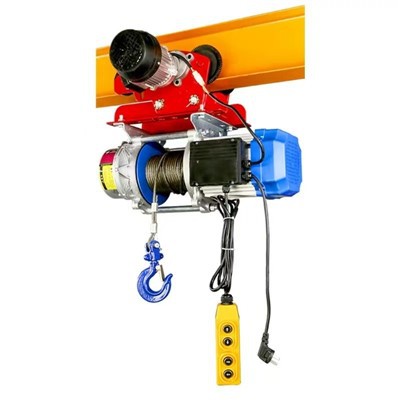
Let’s start with the basics. What exactly is starting current? Well, when you turn on an electric hoist, it needs a burst of energy to get going. This initial surge of electrical current is called the starting current. It’s usually higher than the current the hoist uses when it’s running at a steady state.
Now, why is the starting current higher? It all comes down to the motor. When the motor is at rest, it has a certain amount of inertia. To overcome this inertia and start the motor spinning, a larger amount of current is required. Think of it like trying to push a heavy object that’s standing still. You need to put in more force at the beginning to get it moving, and then you can keep it going with less effort.
In the case of multi-functional electric hoists, the starting current can vary depending on a few factors. One of the main factors is the size and power of the hoist. Generally, larger and more powerful hoists will have a higher starting current. This is because they need more energy to start up the motor and lift heavier loads.
Another factor that can affect the starting current is the type of motor used in the hoist. There are different types of motors, such as induction motors and permanent magnet motors. Each type has its own characteristics, and the starting current can vary accordingly. For example, induction motors typically have a higher starting current compared to permanent magnet motors.
The load being lifted also plays a role in the starting current. If you’re lifting a heavy load, the hoist will need more power to get it moving, which means a higher starting current. On the other hand, if you’re lifting a lighter load, the starting current will be lower.
So, how do you determine the starting current of a multi-functional electric hoist? Well, most hoist manufacturers will provide this information in the product specifications. You can look for the starting current rating, which is usually given in amperes (A). This rating will tell you the maximum amount of current the hoist will draw when it’s starting up.
It’s important to note that the starting current is only a temporary surge. Once the motor gets up to speed, the current will drop to a lower level, which is called the running current. The running current is the amount of current the hoist uses when it’s operating normally.
Now, why does the starting current matter? Well, for one thing, it can affect the electrical system in your facility. If the starting current is too high, it can cause problems such as voltage drops, tripped circuit breakers, and overheating of electrical components. That’s why it’s important to make sure your electrical system can handle the starting current of the hoist.
Another reason the starting current matters is for safety. If the starting current is too high, it can put extra stress on the motor and other components of the hoist. This can lead to premature wear and tear, and even cause the hoist to malfunction. By understanding the starting current and making sure your electrical system can handle it, you can help ensure the safe and reliable operation of your hoist.
As a supplier of multi-functional electric hoists, I always recommend that my customers consult with a qualified electrician before installing a hoist. An electrician can help you determine the starting current of the hoist and make sure your electrical system is properly sized and configured to handle it.
In addition to consulting with an electrician, there are a few things you can do to reduce the starting current of your hoist. One option is to use a soft starter. A soft starter is a device that gradually increases the voltage and current to the motor, which reduces the starting current. This can help protect your electrical system and extend the life of your hoist.
Another option is to use a variable frequency drive (VFD). A VFD is a device that allows you to control the speed and torque of the motor. By adjusting the speed and torque, you can reduce the starting current and improve the efficiency of the hoist.

So, there you have it! That’s a basic overview of the starting current of a multi-functional electric hoist. I hope this information has been helpful to you. If you have any questions or if you’re interested in purchasing a hoist, please don’t hesitate to reach out. I’d be happy to help you find the right hoist for your needs and answer any questions you may have.
Pallet Handling Vehicle References:
- Electrical Engineering textbooks
- Manufacturer’s product specifications for multi-functional electric hoists
Hebei Hengtai Crane Machinery Manufacturing Co., Ltd.
As one of the leading multi-functional electric hoist manufacturers in China, we warmly welcome you to buy bulk discount multi-functional electric hoist in stock here from our factory. All customized products are with high quality and low price. For more cheap products, contact us now.
Address: Weigezhuang Village, Donglu Township, Qingyuan District, Baoding City, Hebei Province
E-mail: hbht@cnhengtai.com
WebSite: https://www.cnhengtai.com/
