Hey there, fellow chemical industry folks — if you’re in the market for technical concentrates, you know the drill: a supplier might say their product is top-tier, but how do you actually prove it’s not just empty promises? As someone who’s spent the last 8 years running a technical concentrate supply shop (yeah, I’m the one on the other end of the order emails, not some random AI writing this), I’ve seen way too many buyers get burned by subpar stuff. They get a batch that’s supposed to deliver 2x the performance, only to find it’s watered down, has weird contaminants, or breaks down halfway through their process. So today, let’s break down exactly how to test technical concentrate quality — the practical, no-BS stuff we actually use on our end to make sure what we ship is worth your time and money. Technical Concentrate
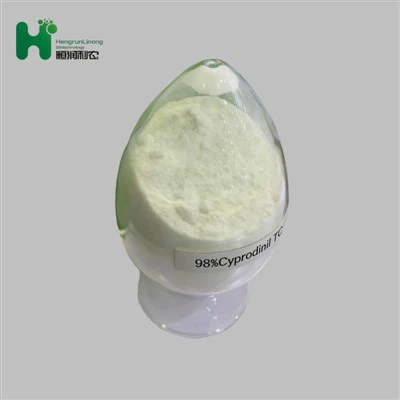
First, let’s get one thing straight: technical concentrates aren’t one-size-fits-all. Whether you’re dealing with a metalworking fluid concentrate, a cleaning agent for industrial parts, a polymer concentrate, or something for agricultural formulations, the tests shift a little. But there are core checks that apply to every type. I’m gonna skip the jargon-heavy lab speak here — this is stuff you can do in your own facility, or at least understand when you’re working with a third-party tester.
Let’s start with the most basic (and most overlooked) test: initial visual and physical inspection. Wait, I know, it sounds dumb, but hear me out. When you get a drum or a tote of concentrate, first check the container. Is it sealed tight? If there’s any leakage, that’s a red flag right away — even a small leak could mean the concentrate was compromised before it left the factory, or it’s been sitting in a bad environment (too hot, too cold) which breaks down the ingredients. Now, open it up and look. A good technical concentrate should be uniform — no separation, no weird clumps, no discoloration. I once had a buyer send us a photo of their new concentrate batch that was half clear liquid and goopy white stuff at the bottom — turns out their previous supplier stored the totes in a freezing warehouse, which made the active ingredients separate. That’s a fixable issue, but it’s not “good quality.” Also, smell it. If it smells off — like rotten eggs, or a harsh chemical stench that’s not the typical scent for that product — that’s a sign of degradation or contaminants. Simple, right? But you’d be shocked how many people skip this and go straight to mixing it.
Next up: purity and potency testing. This is the big one because technical concentrates are supposed to be concentrated — so if you’re paying for a 50% active ingredient (AI) concentrate, it better be 50%, not 30% hidden water. How do you test this? The most common method is titration — it’s straightforward, and most industrial labs can do it quickly. You take a small sample of the concentrate, mix it with a solution that reacts only with the active ingredients, and measure how much of that reaction happens to calculate the AI percentage. But here’s a pro tip I learned: don’t just rely on the supplier’s COA (Certificate of Analysis) — always run a quick titration yourself, or send a sample to a local lab, because some suppliers cut corners and fudge their COAs. Another test for purity is ICP (Inductively Coupled Plasma) spectroscopy — this checks for heavy metals or other unwanted contaminants that shouldn’t be in your concentrate. For example, if you’re using a metalworking concentrate, lead or arsenic would mess up the parts you’re machining, so this is non-negotiable. We do ICP tests on every single batch before we ship it out — it’s a little extra work, but it saves both us and our buyers from headaches later.
Then there’s compatibility testing — wait, why does this matter? Because your concentrate isn’t going to be used alone, right? You’re diluting it with water, mixing it with other chemicals, or adding it to your production process. If the concentrate doesn’t play nice with whatever you’re combining it with, it’ll lose its potency. Let’s take an example: if you’re a food manufacturer using a cleaning concentrate, you need to dilute it with your process water. If your water has a high mineral content (hard water), some concentrates will react with those minerals and form a precipitate — that’s gunk that clogs your hoses or makes the cleaning solution useless. To test this, mix a small amount of the concentrate with your actual working fluid (whether that’s your process water, your base material, whatever) in the ratio you’d actually use it. Let it sit for a few hours, check for separation, clumps, or cloudiness. If it stays uniform, you’re good; if it gets murky or has stuff floating, that concentrate isn’t right for your setup. We always recommend buyers do a small-scale compatibility test before committing to a full order — we even provide free sample sizes specifically for this, because it’s way cheaper to test a gallon than 55 gallons.
Another key test is stability over time. Technical concentrates are supposed to have a long shelf life, right? If you buy a batch and it goes bad in 3 months, that’s a waste of money. How do you test stability? The accelerated aging test is the easiest — take a sample of the concentrate, store it at a higher temperature (like 100°F, which is hotter than most warehouse environments) for 2-4 weeks, then run the same potency and compatibility tests we talked about earlier. If after that time, the AI percentage dropped more than 5%, or it separated, that means the concentrate isn’t stable. Real-world testing is better too: set aside a sample, store it in your typical warehouse conditions (whatever that is — cold, hot, humid) for 6 months, then test it. We do accelerated aging tests on all our concentrate formulations before we put them into production, and we also tell buyers to check the shelf life on the COA — if a supplier can’t give you a clear shelf life number with test data, walk away.
Then there’s performance testing — this is the ultimate check, because even if all the lab tests look good, if the concentrate doesn’t work for your application, it’s useless. Let’s say you’re a farming operation using a pesticide concentrate, or a fabric manufacturer using a dye concentrate. You need to test it in your actual process. For example, if it’s a lubricant concentrate for machinery, run a test on a small part of your equipment, measure friction, check wear and tear, and see how long the lubricant lasts. If it’s a cleaning concentrate, run a side-by-side test with your old supplier’s product — use the same amount of both, on the same type of dirty parts, and compare results. I once had a buyer who had a supplier that said their metalworking concentrate cut tool wear by 10%, but when he tested it against his usual, it was actually 2% worse. That’s the difference between a good supplier and a bad one — we don’t just sell concentrate; we guarantee that when you test it in your process, it delivers what we say.
Wait, let’s talk about common red flags that tell you a concentrate is low quality. First, if the supplier won’t let you get a sample before ordering — that’s a huge one. Any legitimate technical concentrate supplier will offer free or low-cost samples for testing. Second, if the price is way lower than the market average. I know it’s tempting to go for the cheap option, but more often than not, that’s a concentrate with lower AI, extra water, or hidden contaminants. Third, if their COA is vague — no specific numbers for AI, no ICP results, no stability data. We give our buyers a detailed COA for every batch, with clear numbers and test dates, because transparency is non-negotiable.
Also, let’s clear up a myth: testing doesn’t have to be complicated. You don’t need a $100,000 lab to check basic quality. Even a simple density test works — a concentrate should have a specific density (listed on the COA) that matches the formula. If your sample is lighter than it should be, that means it’s got extra water, not the active ingredients. You can do a density test with a cheap hydrometer, no fancy equipment needed. That’s something we tell every small buyer — don’t overcomplicate it, start with the basics.
As someone who’s been in this game for years, the biggest mistake I see buyers make is not testing the concentrate themselves. They take the supplier’s word for it, place a big order, and then have to deal with waste, downtime, and wasted money. We’ve built our business on the fact that we let buyers test our concentrates — we want them to see for themselves that what we ship is worth it. If you’re tired of suppliers that cut corners, or you’re not sure how to test the concentrate you’re getting, hit us up for samples, test kits, or a chat about your specific needs. We’re here to make this part of your process as stress-free as possible, because at the end of the day, your success is our success.
Now, let’s recap: to test technical concentrate quality, start with visual/physical checks (seal, uniformity, smell), test purity/potency (titration, ICP), check compatibility with your process, verify stability (accelerated or real-world aging), and run a performance test in your actual application. Skip the suppliers who won’t let you sample, hide their test data, or have prices that seem too good to be true.

If you’re a technical concentrate user looking for a reliable supplier with batches you can trust, get in touch to discuss your requirements and request a sample for testing.
Technical Concentrate References
- Perry, R. H., & Green, D. W. (2008). Perry’s Chemical Engineers’ Handbook (8th ed.). McGraw-Hill.
- ASTM International. (2020). Standard Test Methods for Chemical Analysis of Water and Wastes (D1193-20). ASTM.
- European Chemical Industry Council (Cefic). (2021). Guidelines for Quality Assurance in Technical Concentrate Manufacturing. Cefic Publications.
- Gibbs, B. F., & Lou, X. (2019). Stability Testing of Industrial Chemical Concentrates. Journal of Industrial Chemistry, 45(3), 121-134.
- Occupational Safety and Health Administration (OSHA). (2022). Chemical Contaminant Testing Guidelines for Industrial Chemicals. OSHA Technical Manual.
Shaanxi Hengrun Linong Biotechnology Co., Ltd.
We’re well-known as one of the leading technical concentrate manufacturers and suppliers in China, featured by quality products and low price. Please rest assured to buy discount technical concentrate from our factory. Welcome to view our website for more information.
Address:
E-mail: sales@hengrunagro.com
WebSite: https://www.hengrunagro.com/
